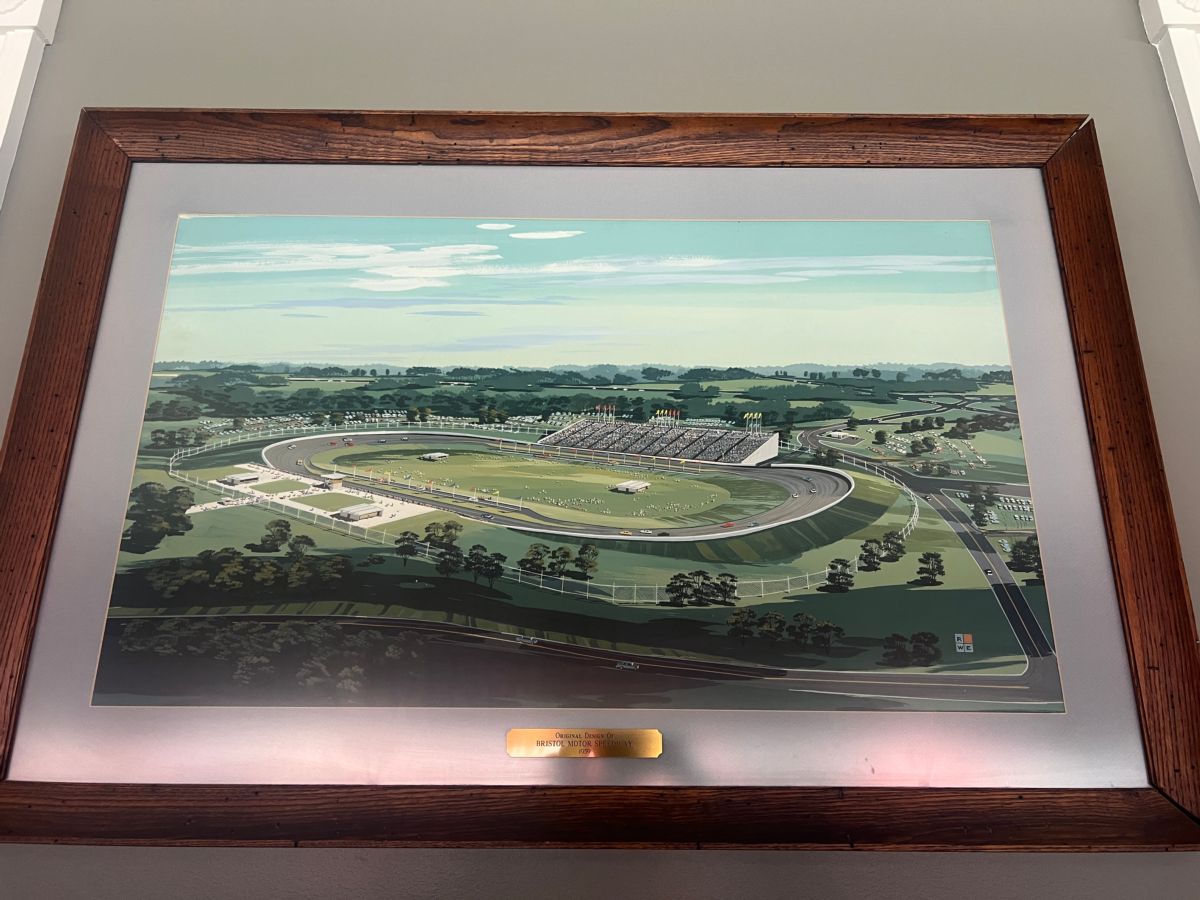
- A bold idea begins: Bristol Motor Speedway started with little more than imagination, determination, and a few napkins. Founders Larry Carrier and Carl Moore reportedly sketched their earliest track plans during informal conversations.
- From paper to pavement: Those simple drawings soon became an ambitious vision: build a major racing venue among the hills of Northeast Tennessee. The founders wanted to create a track that would deliver exciting competition and bring thousands of racing fans to the region.
- Construction moves fast: Work began in January 1961. The timeline was remarkably aggressive, especially for a project requiring a racetrack, grandstands, facilities, and supporting infrastructure.
- Ready in six months: Roughly six months after construction started, Bristol was prepared to welcome its first fans. The speed of the project reflected the founders’ confidence, urgency, and willingness to turn an unconventional idea into reality.
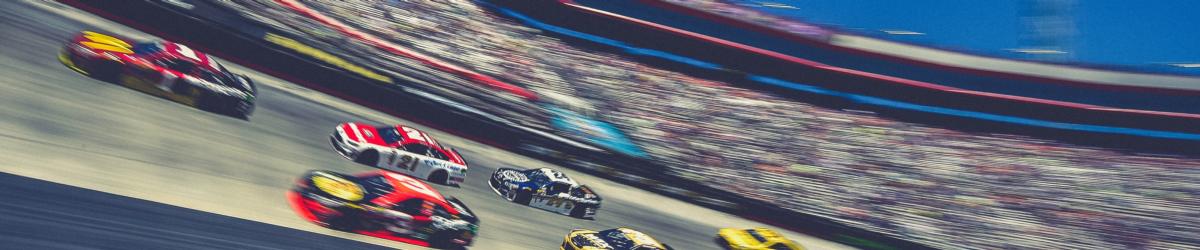
- A distinctive racing experience: Bristol’s compact layout placed spectators close to the action. The short track created tight racing, constant traffic, and the kind of dramatic contact that would eventually make Bristol one of NASCAR’s most recognizable venues.
- Small beginnings, enormous legacy: What began as sketches on napkins grew into a stadium known as “The Last Great Colosseum.” Bristol Motor Speedway became famous for roaring crowds, nighttime racing, and unforgettable moments under the lights.
- The winning formula: One quick sketch + two determined founders + six months of construction = a legendary American racetrack.
Bruton Smith Takes Bristol to New Heights
-
A new era begins: On January 22, 1996, Speedway Motorsports founder Bruton Smith purchased Bristol Motor Speedway from Larry Carrier for $26 million.
-
Smith sees bigger possibilities: Already known as a bold and innovative racing promoter, Smith recognized that Bristol’s intense short-track action could attract an even larger audience. His plan was simple: create more room for fans without losing the track’s distinctive character.
-
Seats rise toward the sky: When Smith acquired Bristol, the speedway held approximately 71,000 spectators. Under his leadership, a massive construction and expansion program added grandstands, suites, improved facilities, and towering rows of seats around the track.
-
Capacity more than doubles: Bristol’s seating capacity eventually reached approximately 160,000. The expansion transformed the property into one of the largest sports venues in America and gave the speedway its enclosed, stadium-like appearance.
-
The Colosseum takes shape: With grandstands surrounding the entire concrete oval, Bristol became a modern-day arena for motorsports. The steep seating placed fans almost directly above the racing action, while the enclosed design amplified the sound of the engines.
-
More than extra seats: Smith’s investments helped make a race at Bristol feel like a major entertainment event. Larger crowds, upgraded amenities, premium seating, and dramatic night racing strengthened the speedway’s national reputation.
-
The growth formula: 71,000 seats + Bruton Smith’s ambitious vision = a racing arena built for approximately 160,000 fans.
-
A transformed landmark: Larry Carrier and Carl Moore created Bristol from a napkin sketch. Bruton Smith expanded that vision into “The Last Great Colosseum”—a towering monument to NASCAR and its fans.